Autopilot doesn’t work for accessibility
April 26, 2027 marks when most public institutions’ ongoing obligation to maintain WCAG 2.1 AA conformance begins—not ends. Institutions that treat it as a finish line may be the most exposed once the spotlight shifts to sustained, measurable progress.
Tools like Yuja Panorama may suggest that AI and automation can get you to compliance fast. But Title II compliance doesn't describe a score—it describes a sustained, good-faith program of ongoing remediation and measurable progress, with the goal of creating content that isn't just technically accessible, but actually usable for all students. And that’s where the idea of autopilot breaks down.
Bulk fixes with a limited audit trail
Automation without individual review can introduce errors at scale with no documentation of what changed or why. This gap creates vulnerability—whether a complaint is filed with the Office of Civil Rights or a student seeks legal recourse.
A score that improved overnight
A score that jumped without a documented remediation process doesn't demonstrate good-faith effort to a regulator or litigator; it demonstrates that a tool was run and raises questions about the durability and defensibility of the underlying improvements.
Recurring issues, every term
When faculty don't understand why content isn't accessible to their learners, they recreate the same problems every semester. The DOJ's final rule is clear: ongoing conformance is required, and a point-in-time score is not enough.
Perpetual tool dependency
Tools that do the work for faculty don't build institutional capability—they’re just a paid subscription to avoiding the problem.
Why leading institutions choose Ally
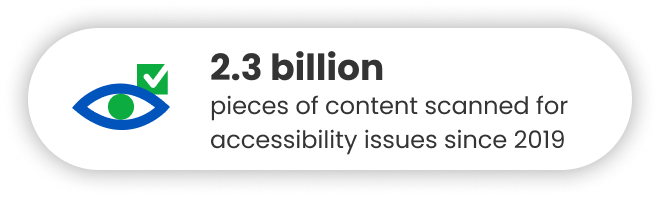
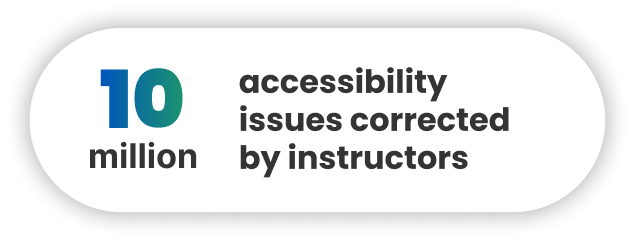
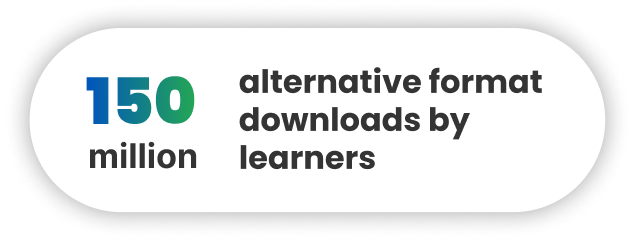
Ally leads the market not just in scale, but in trust. With billions of content items scanned, millions of instructor-led fixes, and hundreds of millions of alternative format downloads, Ally delivers measurable results, responsible innovation, and lasting institutional capacity.

- 1Faculty capability, not dependency
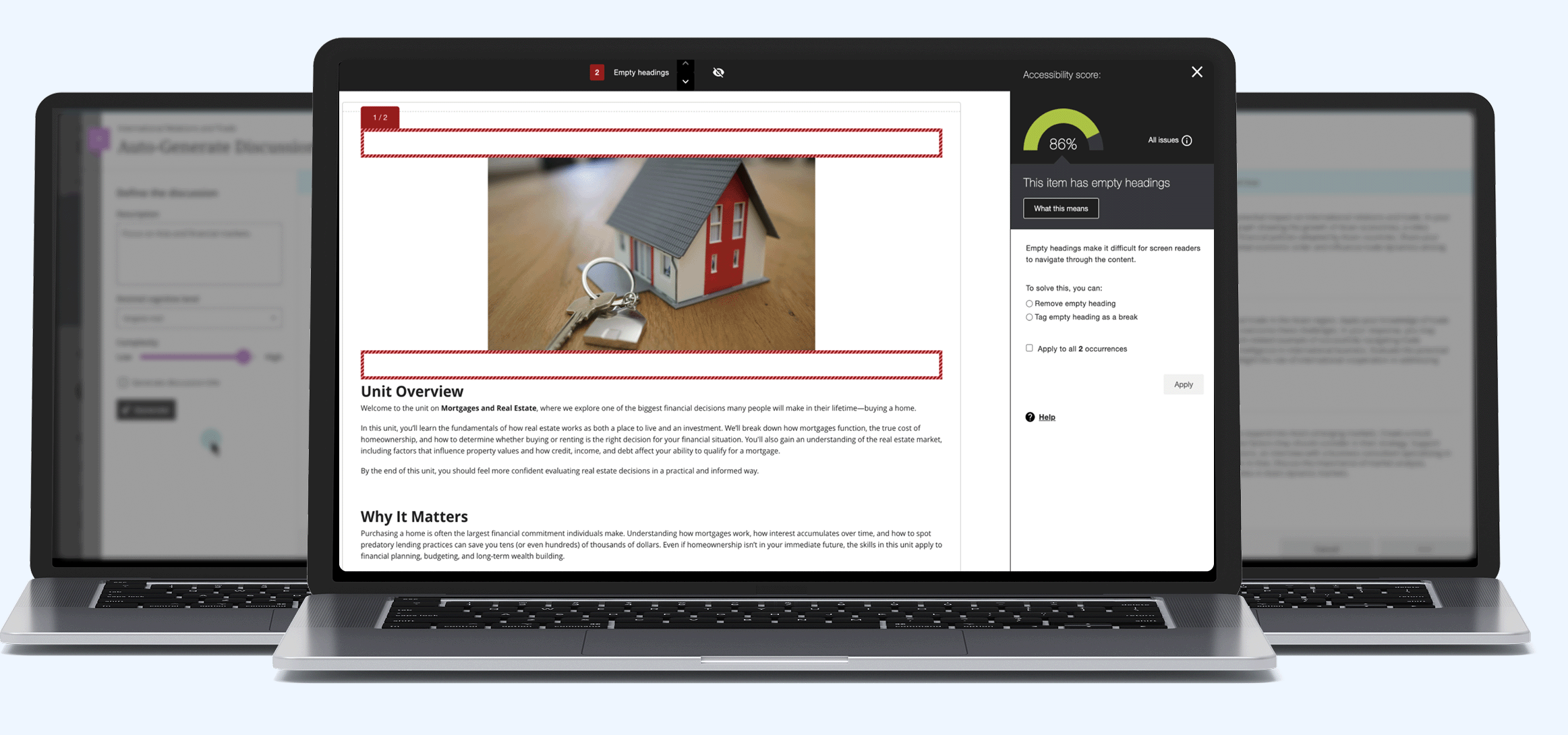
Step-by-step guidance built into the course-building workflow means faculty learn as they remediate, which means fewer issues next term. - 2Reporting on progress that compounds over time
Course, department, and institution-level dashboards show progress over time, not just point-in-time scores. - 3Alternative formats for students
Ally automatically generates audio, ePub, HTML, tagged PDF, Braille, and many more formats, directly in the LMS to support equitable access for authorized users. With 150M+ downloads, the demand is proven. - 4PDF Quick Fixes & AI Alt Text
AI streamlines fixes while keeping instructors in control of every change and learning best practices—documented, intentional, defensible, and without any add-on fees.
Trusted by 1,200+ institutions raising the bar on accessibility







Ready for a better accessibility solution?
April 26 will come and go. What matters is what you can demonstrate on April 27, and every day after. Talk to an Ally expert about what a sustainable, defensible accessibility program looks like for your institution.